

How do toxic PFAS “forever chemicals” enter our waterways? Where are we exposed to these chemicals? And what does it mean for our health?
There’s nothing more vital to the health of our ecosystems, our families and to our quality of life than access to clean, pollution-free water. But many of our rivers, lakes and streams are vulnerable to pollution from toxic chemicals that can pose serious risks to our health.
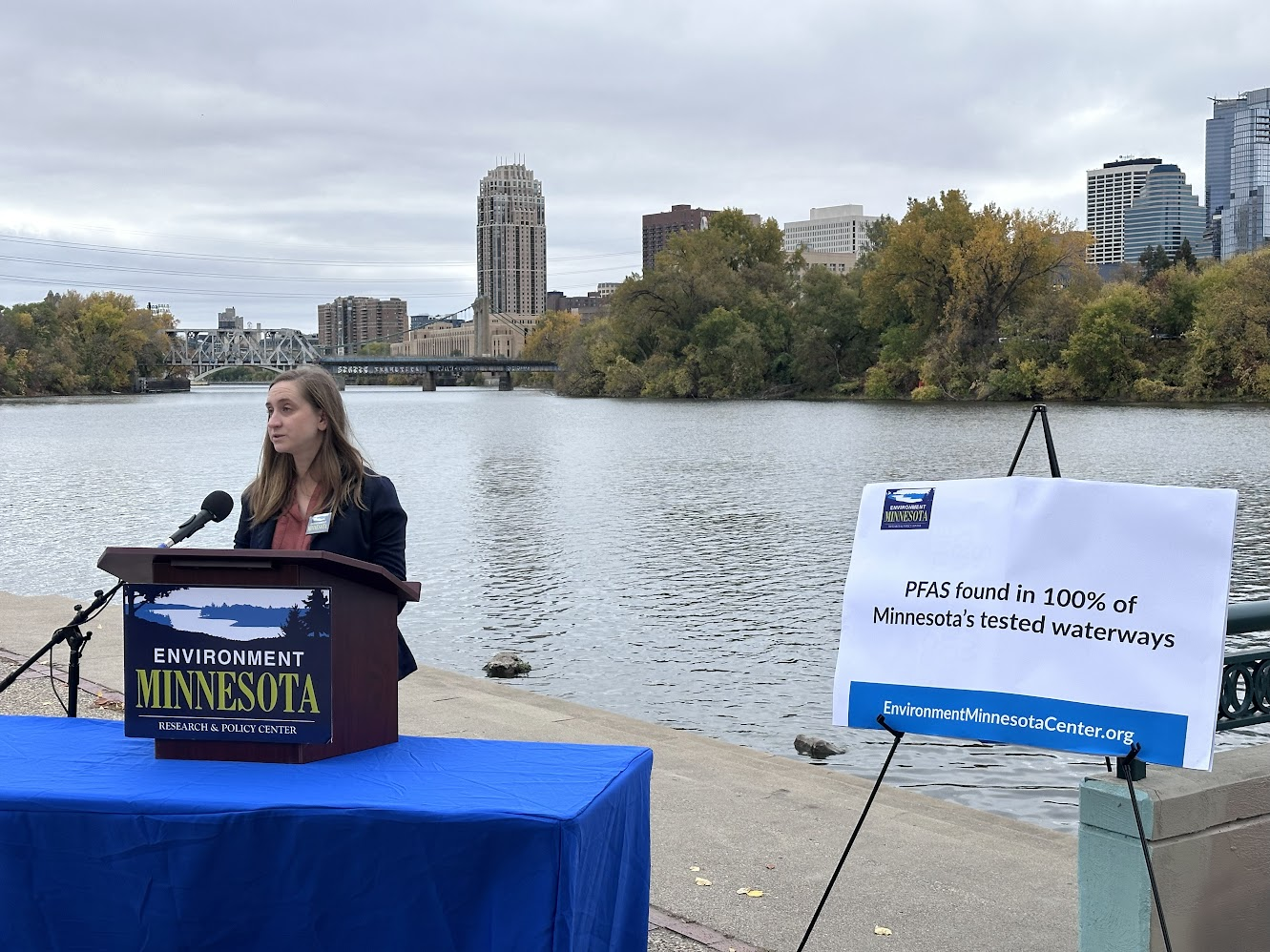
In fact, PFAS were detected in the water at more than 80% of roughly 1,600 locations tested across the United States from 2022-2024, according to a new report by our research partners at Environment American Research and Policy Center.
To learn more about what PFAS are, check out our explainer here. But the short version is that PFAS are a class of toxic chemicals that are valued for their non-stick and water repellent properties. But the chemical composition that makes them non-stick, and stain repellent also makes them resistant to break down in nature, and as a result they can linger in our environments for thousands of years – hence the name “forever chemicals.” So far, studies have found numerous links between exposure to PFAS and an increased risk to adverse health effects including decreased fertility, developmental delays in children, and increased risk of cancer.
The health of our waterways is tantamount to the health of our communities. While many Americans are still becoming knowledgeable about what PFAS are, it’s essential to educate ourselves on how PFAS enters our waterways and communities.
The EPA estimates that 85,000 tons of PFAS are synthesized every year. After production, PFAS can enter our waterways through a wide array of pollution pathways.
The following are key pathways through which PFAS can flow into our waterways:

Despite growing concern about PFAS contamination, relatively little is known about how widespread these chemicals are in America’s surface waters. Recently, Environment American Research and Policy Center performed an analysis which examined PFAS monitoring data collected from rivers, lakes, streams and other surface waters between 2022 and 2024.
Across the United States, PFAS were detected at least once at 1,329 of 1,602 monitored locations. As many as 114 different PFAS compounds were detected at one or more water testing locations.
Because PFAS monitoring remains limited in many parts of the country and not all PFAS monitoring results nationally are reported or readily available, these findings only represent a portion of existing contamination.
To learn more about where our research found PFAS you can explore our interactive map here.
While many people are rightly concerned about widespread PFAS contamination of drinking water, forever chemicals in our rivers and streams can also wind up in wildlife and the fish we eat. And so even if drinking water utilities filter all PFAS before water flows from your kitchen sink, we still cannot tolerate these forever chemicals in our rivers, lakes and streams.
For decades, evidence has been piling up linking PFAS to a wide range of damaging effects to the health of people (not to mention the health of other species). While industry documents suggest that PFAS producers knew that these chemical compounds were dangerous as early as 1970, the risks didn’t become widely known until the 1990s. So far, studies have found links between PFAS exposures and health disorders including:
What can and should be done to reduce the PFAS threat to our health and environment? For toxic chemicals like PFAS that persist over time and contaminate our water and health through numerous pathways, there is simply no safe way to “manage” their ubiquitous use in our economy.
That’s why Environment America, PIRG and other groups are working to phase out the use of PFAS chemicals wherever we can. In 2020, we convinced Congress to order the Pentagon to phase out the use of PFAS-laden firefighting foam on military bases. In 2022, we helped convince Columbia Sportswear to stop using PFAS in their clothes and other products. We also helped win restrictions on PFAS in everyday consumer products in a number of states, and we have bills pending in other states.
Until we turn off this toxic tap at the source, we are also taking several steps to help people reduce their exposure to harmful PFAS, including:
The longer we wait to turn off the toxic tap, the greater risk that we have to our health. Non-stick pans might be convenient, that high-tech raincoat might keep you dry in even the most angry storms, but these are absurd reasons to allow toxic chemicals into our waters.
Combating PFAS contamination requires us to look ourselves in the mirror and ask the hard questions. Why are we endangering the health of our water – and the future of our community – for chemicals that will linger in our waters far longer than us?
Clean Water Director and Senior Attorney, Environment America
John directs Environment America's efforts to protect our rivers, lakes, streams and drinking water. John’s areas of expertise include lead and other toxic threats to drinking water, factory farms and agribusiness pollution, algal blooms, fracking and the federal Clean Water Act. He previously worked as a staff attorney for Alternatives for Community & Environment and Tobacco Control Resource Center. John lives in Brookline, Mass., with his family, where he enjoys cooking, running, playing tennis, chess and building sandcastles on the beach.


